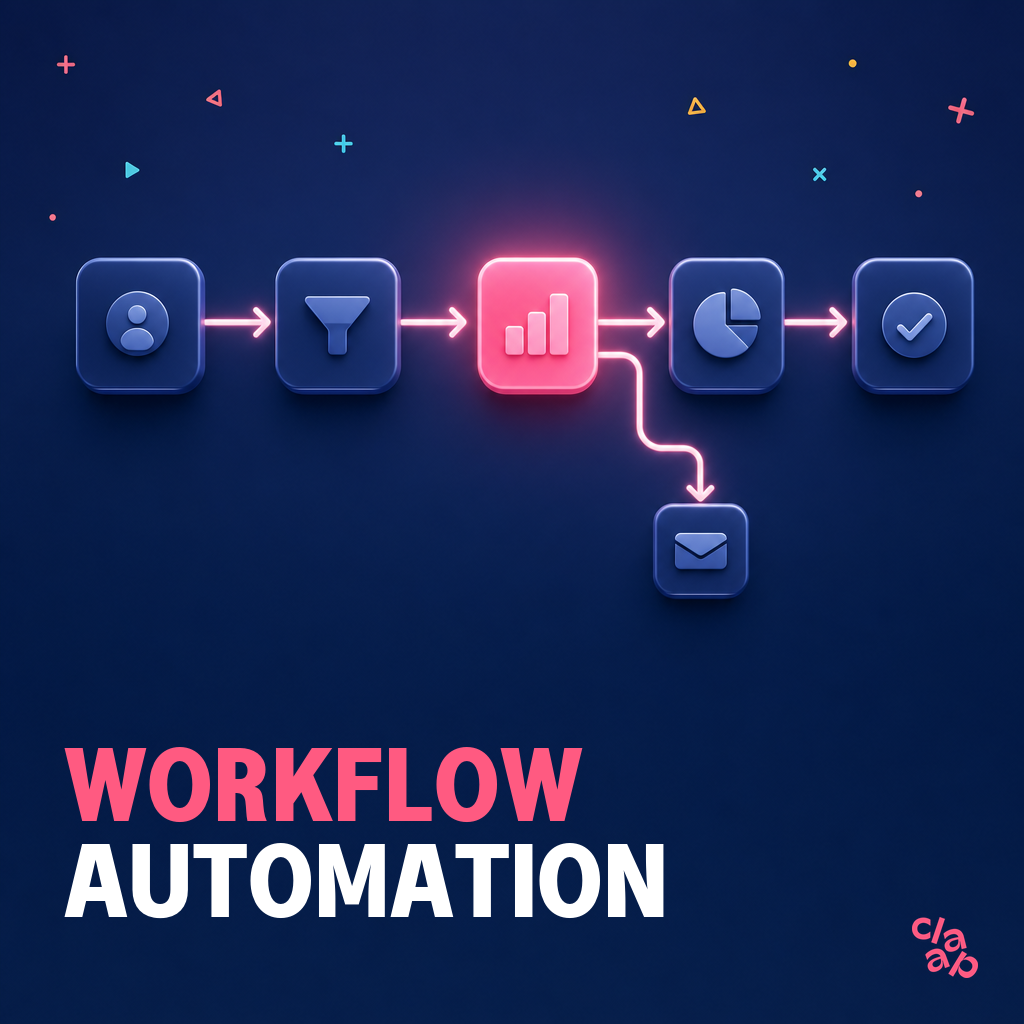
The most destructive rule in modern sales management is demanding that your reps manually update their pipeline at the end of every week.
We have been conditioned to believe that strict CRM hygiene is the hallmark of a disciplined sales team, but the data tells a completely different story.
I used to follow this old approach myself. I thought that if data was missing from our opportunities, it was simply a performance issue and that we needed to coach our reps. The reality is that human data entry is an operational task that actively kills deal momentum. When you force reps to look backward and fill out boxes, you drag them away from the exact moments buyers are ready to engage.
This guide breaks down how to turn your CRM from a static database into an automated engine that accelerates your pipeline velocity.
The State of Sales Automation (And The Quota Paradox)
We face a weird reality in modern sales: teams log into more applications than ever, yet conversion rates keep falling. This is the Quota Paradox. Software vendors promised that adding ten or more tools to your sales stack would generate more revenue, but tech stack fatigue is real. Instead of selling, your reps spend their days managing administrative checklists.
A sales automation CRM fixes this by running workflows directly inside your customer relationship management platform. The software automatically updates your entire customer database by syncing live communication data directly into open pipeline fields. When you shift from manual admin checklists to native automation, you unlock true pipeline velocity. See how leading teams measure this in our guide to sales metrics.
If you want to see how these automated systems fit into wider commercial operations, take a look at our guide on sales productivity tools.
The industry data highlights exactly why our current setup is failing:
- 91% of sales organizations missed their quota expectations in 2024.
- The average B2B sales rep attained 43% of quota, down from 53% in 2020.
- Sales reps spend about 22% of their time on CRM data entry, roughly 8.8 hours per week.
Reps skip updating fields because manual tracking requires too much time. Claap is a conversation intelligence platform built to eliminate this exact gap. It captures sales conversations and turns them into structured CRM data for follow-ups, forecasts, coaching, and AI agents. Your database stays accurate, and your sales team never has to lift a finger to fill out post-call admin work.
Essential Features: What Your CRM Must Automate
I spent years reviewing messy pipelines before realizing that an automation strategy only works if it maps directly to your buyer journey. If your software requires manual updates at every stage, it is a database, not an automation engine.
To keep your pipeline moving, look at how your system handles these core operational stages:
Lead Capture and Intelligent Routing
When a prospect requests a demo, every minute matters. Your system must instantly capture that lead information and route it to the right representative based on territory, company size, or industry.
Native Multi-Step Sequencing
Modern customer relationship systems either handle prospecting sequences natively or function as the central nervous hub for dedicated tools like lemlist and Apollo. The workflow must follow two strict execution rules to protect your data hygiene:
- Prospecting sequences must trigger automatically the moment a lead satisfies specific criteria inside your database.
- Every digital touchpoint, including email opens, link clicks, and direct replies, must log back to the master record automatically.
Meeting Prep and Discovery Context
Your representatives should never spend thirty minutes searching through old spreadsheets to prepare for a call. An automated setup organizes complete customer background information into a single view before the meeting starts. To see how we automate this context collection, explore our conversation intelligence software.
Opportunity Management and Pipeline Triggers
Bain & Co found that 70% of companies fail to integrate their sales plays into CRM and revenue technology tools. Instead of letting your sales methodologies sit in a forgotten document, your system must use live triggers. When an opportunity advances to negotiation, the system automatically triggers internal task workflows and alerts your legal team based on the updated deal status.
Operationalizing Your Sales Plays With Claap
We designed Claap to bridge the gap between your real-world conversation and your structural sales plays. Whether your team relies on frameworks like MEDDIC or BANT, Claap operationalizes these guidelines during live calls. The software evaluates the live discovery call to pull out qualification details and populates those specific database fields directly inside your system.
The Game Changer: Layering AI and Claude Over CRM Data
Standard system workflows have always relied on rigid, rule-based logic. You set up an instruction that states if a prospect downloads a specific ebook, the system sends a fixed email template. It is a simple "If X, then Y" structure that completely misses the nuance of human interactions. Artificial intelligence introduces reasoning to this layer, changing how your system interprets complex sales data.
When you deploy frontier large language models like Claude directly over your pipeline, you upgrade basic data collection to real-time execution. This reasoning layer is the backbone of modern AI sales tools.
- Instant Account Synthesis: instead of digging through historical records, I use Retrieval-Augmented Generation (RAG) to let Claude scan customer account histories, past support tickets, and email threads. The system synthesizes this data into a comprehensive briefing note, giving our reps a complete meeting preparation overview in under 60 seconds.
- One-Click Workflows: you can build dedicated Claude Skills to handle repeatable sales plays. This setup packages complex tasks like call summaries, qualification reporting, and weekly pipeline reviews into single-action automations.
- Quantifiable Efficiency: the operational numbers back up this transition. McKinsey reports that sales teams pioneering AI have generated more than 50% more leads and appointments while reducing call times by 60% to 70%.
Feeding the Engine With Pristine Conversational Data
An AI model is only as smart as the information it can access. If your database is filled with blank fields and missing summaries, Claude cannot generate accurate account strategies. This highlights a critical rule: your AI model needs a reliable context provider.
We positioned Claap to serve as that exact fuel layer for Claude. Claude requires deep, accurate operational insights to build precise follow-ups and account plans. Claap processes the raw conversational audio from your live meetings to feed your database with comprehensive written context. Through Claap MCP, the same structured data can power external AI agents such as Claude, ChatGPT, or lemlist. By pushing this pristine data back into your sales setup, you give your AI models the rich context they need to execute reliable workflows.
How to Build the 6-Layer Sales Automation System
I often see revenue leaders make the mistake of buying software tools and plugging them together randomly. This lack of structure leads to data silos and broken processes. To build an architecture where your applications actually communicate, you must separate your operations into six distinct layers.
Signals ➔ Data (Pre-CRM) ➔ Decisions ➔ Actions ➔ CRM ➔ Monitoring
This structural framework completely changes how your technology processes data, establishing streamlined pipelines that respond instantly to customer signals.
The 6-Layer Architecture
- 1. Signals: this is the digital footprint left by your buyers. It combines inbound intent signals, including pricing page visits, product usage, and third-party intent data (G2 visit, LinkedIn comments, active recruitment).
- 2. Data (The Pre-CRM Layer): a massive debate exists around where this information should land. I agree with best-in-class teams that pipe these raw signals into a Data Warehouse or Customer Data Platform (CDP) first. This pre-CRM layer keeps your core database clean of unqualified, cold contacts.
- 3. Decisions: this is the rules engine or artificial intelligence model that interprets and scores your collected signals. For example, the system triggers an alert when a prospect opens an outbound email and immediately visits your pricing page twice.
- 4. Actions: once a prospect meets your scoring thresholds, the system takes immediate action. It automatically assigns tasks, updates internal alerts, or transfers the record to the next phase.
- 5. CRM: the qualified prospect enters your customer relationship system only after passing the validation layers. This discipline ensures your sales representatives spend their energy strictly on active relationships and open pipelines.
- 6. Monitoring: you must consistently track your conversion rates at this final stage. Reviewing this performance allows you to refine your scoring logic and decision engines over time.
Turning Your Database Into a Single Source of Truth
Your pipeline data can quickly become fragmented across different prospecting apps. To avoid this, your primary CRM must act as the absolute single source of truth for all customer records. If you want to understand how to manage large-scale contact intelligence and pipeline tracking, look into our revenue intelligence software.
When you build out this architecture, you need to follow a clear maturity path: prioritize admin relief first, then transition to pipeline velocity. You cannot scale automated outbound sequencing if your basic data hygiene is completely broken. Fix your automated data collection before trying to scale complex outbound plays.
Structuring Your Foundation With Claap
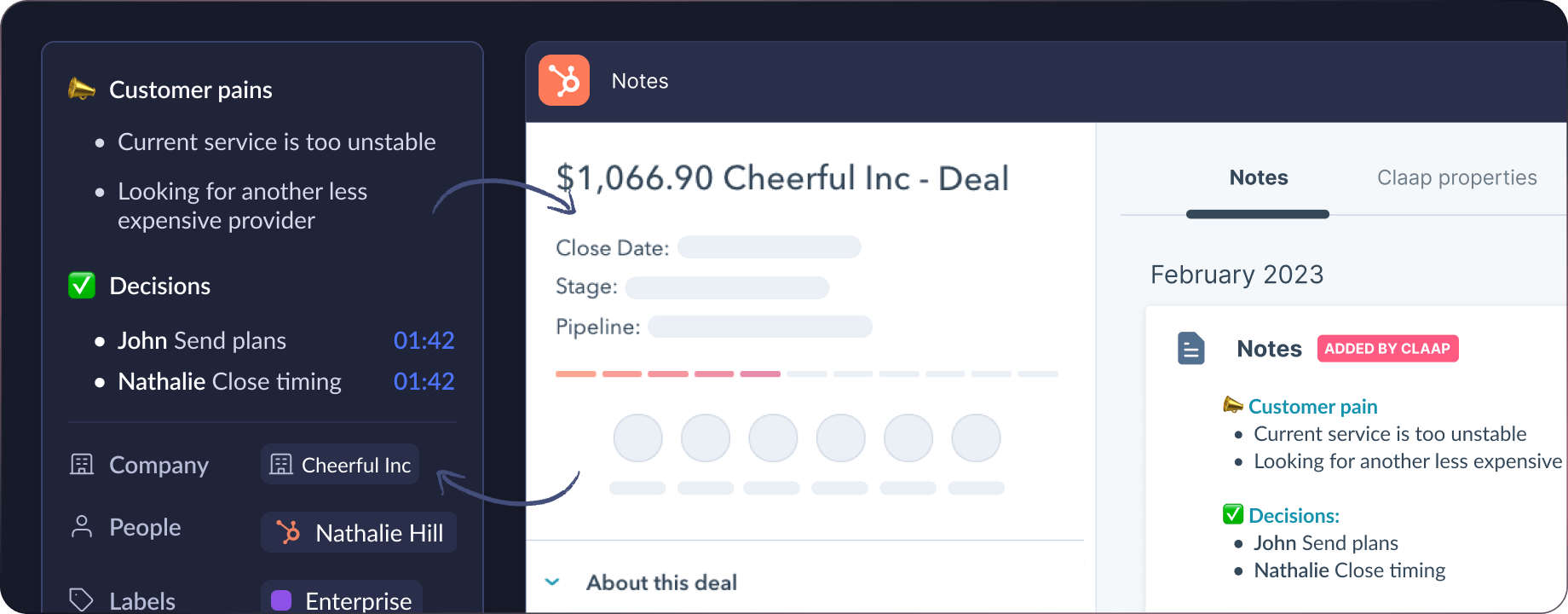
We built Claap to sit directly at the foundational layer of this six-step system. Customer conversations are the most valuable signals your team generates, but they are typically lost the moment a call ends. Claap captures these verbal signals by processing the unstructured audio to update your CRM layer seamlessly. This is the foundation of effective CRM tracking for sales calls. This automation keeps your system updated in real time without creating extra admin work for your reps.
{{BANNER}}
Choosing & Implementing the Right Platform
When you look at the enterprise marketplace, HubSpot and Salesforce remain the top hub contenders for setting up your sales infrastructure. Both platforms have moved beyond generic copilots toward named agent products: HubSpot offers Breeze Copilot, Breeze Agents, and Breeze Intelligence, while Salesforce offers its Agentforce autonomous agent platform. However, I have learned that choosing between them matters less than how you execute your actual deployment. If you simply install the software over broken internal habits, you will fail to build a high-performance team.
To ensure your investment drives actual pipeline growth, roll out your system using a strict three-phase deployment framework:
- Phase 1 - Clean the Data: do not migrate messy data into a new system. Your primary step must focus on establishing automated data capture right at the start. By removing human error from the data-entry phase, you ensure your database remains clean and accurate.
- Phase 2 - Encode the Plays: take your structural sales plays, such as specific qualification criteria or discovery steps, and build them directly into your customer relationship workflow. The software should automatically prompt your team with the next logical action based on live pipeline data.
- Phase 3 - Train the Reps: most software rollouts stall because leaders focus entirely on the technical deployment rather than long-term team adoption. Spend your energy coaching your representatives on how the system simplifies their daily workflow. When your team sees that automation eliminates their administrative tax, adoption happens naturally.
Building a modern sales automation CRM is focused on removing the barriers that stop your representatives from selling. When you look at the real-world operational data, it becomes clear that manual data entry is a task that your pipeline cannot afford to pay. By breaking down old process myths and structuring a clear, multi-layered architecture, you can turn your customer database into an automated engine that drives pipeline velocity, and steadily improve sales performance.
You must protect your team's energy by choosing systems that capture and reason over conversation context automatically. If you want to eliminate post-call admin work and sync pristine meeting data directly into your pipeline fields, start a free trial with Claap today.
FAQ
What is the difference between CRM and sales automation?
A CRM functions as your primary customer database. Sales automation runs software workflows directly inside that system to handle administrative tasks automatically.
Without this execution layer, your sales representatives must manually type in every note and update deal stages themselves. Automation sits on top of this storage hub to manage the heavy lifting, such as instantly assigning inbound prospects based on custom rules. This combination keeps your pipeline data accurate while freeing your team to focus strictly on active selling activities.
Why is my sales team ignoring our CRM automations?
Sales teams ignore CRM automations when tools add unnecessary steps to their workflow or when the system relies on bad data. If your automation feels like an administrative checklist rather than a tool that helps close deals, adoption will fail.
Stack fatigue sets in quickly when reps have to log into too many separate applications to complete a single task. Furthermore, if your system triggers automated outreach based on outdated or unverified records, your reps will quickly lose trust in the setup. For instance, if an automated workflow accidentally sends a cold prospecting sequence to an active customer because a field was not updated, it creates massive friction. Your team will actively bypass your automated plays to protect their personal relationships unless you fix your baseline data hygiene first.
How does Claude integrate with a Sales Automation CRM?
Claude integrates with your sales automation CRM through APIs, custom Skills, and autonomous agents. This connection allows the large language model to access your pipeline records, reason over account histories, and execute complex workflows natively.
Rather than relying on basic "If X, then Y" rules, Claude introduces reasoning to your customer database. You can connect Claude via API to build specific workflows that activate based on real-time triggers. For example, you can create a custom Claude Skill that triggers when an opportunity moves into a late-stage review. Claude instantly reads the entire unstructured account history and automatically synthesizes a complete executive briefing note for your team in seconds. This turns your static software into an active operational partner.
How can I stop reps from manually entering data into our CRM?
Deploy AI meeting assistants like Claap to capture your live customer conversations. Claap automatically records your sales meetings, extracts relevant insights, and syncs that pristine data straight into your CRM fields.
When you force your team to fill out text boxes manually, data quality drops because representatives naturally forget conversation details. Introducing an AI assistant into your sales calls automates this entire administrative layer by processing the raw audio into clean notes. Your reps can stay focused on the buyer during the meeting while your database stays completely updated with accurate context.
How much ROI can I expect from AI in my CRM?
Deploying AI within your CRM yields up to 50% more sales leads and drops overall call times by 60% to 70%. These structural improvements directly translate into higher conversion rates and reduced sales cycle duration.
Integrating artificial intelligence into your customer relationship systems eliminates the data bottlenecks that slow down your pipeline velocity. According to global research from McKinsey, the efficiency gains from AI-driven sales activities create a massive lift in team output. For instance, by automating meeting summaries and qualification data capture, a typical enterprise sales representative saves hours of administrative work every week. That saved time allows your team to handle a higher volume of sales opportunities, accelerating your pipeline growth without adding to your headcount.