


8 Best AI Sales Tools for 2026: Real Reviews, Pricing & Tech Stacks
Compare the top 8 AI sales tools for conversation intelligence, prospecting, and CRM. Uncover exact pricing, real Reddit reviews, and the rise of Openclaw in 2026


Success in 2026 depends on efficiency.
Josh Aharonoff recently stated that efficiency is key, since investors shifted away from growth at all costs. Most sales leaders currently navigate this change alone, struggling to compare their performance with market peers.
My research shows that teams spend 70% of their time on low-value admin tasks, while they should spend that time building relationships.
This article identifies the best AI sales tools that automate this groundwork, allowing you to focus on high-impact revenue.
By the end, you will know how to identify deal-breakers in every sales call.
Top 8 AI Sales Tools by Category (2026 Comparison)
My vetting process for these options involves analyzing actual Return on Investment (ROI) data alongside user feedback gathered from platforms such as Reddit and G2.
These choices bypass vendor claims and focus on verified results. Each selection fills a vital gap in an effective AI powered sales tools strategy.
| Tool | Category | Best For | Starting Price | Free Tier | Key Differentiator |
|---|---|---|---|---|---|
| Claap | Conversation & Revenue Intelligence | Agile sales teams replacing multiple tools | $24/user/mo | Yes | Only solution with MCP (Model Context Protocol) for agentic AI stacks; replaces Gong, Zoom, Otter & manual CRM entry |
| Gong | Conversation & Revenue Intelligence | Large enterprise orgs | Custom quote | No | Enterprise-grade deal risk scoring and revenue forecasting suite |
| lemlist | AI Prospecting & Multichannel Outreach | Outbound-heavy teams | $63/user/mo | No | 600M+ intent-driven leads; multichannel sequences (Email, LinkedIn, WhatsApp, Calling) in under 3 min |
| Apollo.io | AI Prospecting & Multichannel Outreach | High-volume prospecting | $49/user/mo | Yes (10K credits) | Massive lead database with deep filtering across millions of contacts |
| Lavender | AI Email Optimization & Coaching | Reps focused on reply rates | $27/user/mo | Yes (5 emails/mo) | Real-time email scoring & AI coaching inside Gmail/Outlook compose window |
| Attio | AI-Native CRM | Fast-growing startups | $29/user/mo | Yes | Notion-like speed; auto-syncs & enriches data from emails and calendar |
| HubSpot Sales Hub | Enhanced CRM | SMBs & growing businesses | $9/user/mo | Yes | User-friendly ecosystem with predictive lead scoring and automated sequences |
| Salesforce Sales Cloud | Enterprise CRM | Large-scale global orgs | $500/100K credits | Yes (200 credits) | Einstein AI & Agentforce autonomous agents for complex enterprise workflows |
Conversation & Revenue Intelligence
Efficiency in 2026 starts with identifying deal-breakers before they sink a forecast. These tools offer more than basic recording; they actually provide signals about potential revenue.
Claap
The agile AI sales assistant essentially replaced Gong, Zoom, Otter, and manual CRM entry.
- Specific Capability: This AI meeting assistant remains the only solution in the space offering a Claap MCP (Model Context Protocol). It acts as a bridge that feeds live, unstructured meeting data directly into your AI agent stack. The system captures every sales conversation, surfaces deal insights, and automates all post-meeting admin tasks.
- User Sentiment: Teams report a 66% uplift in win rates within one quarter. Users praise the intuitive interface and accurate AI summaries compared to rigid enterprise legacy tools.
- Pricing
- Basic:$0
- Pro:$24/license/month
- Business:$48/license/month
- Enterprise: custom
Gong
Gong remains the enterprise standard for conversation intelligence and revenue forecasting.
- Specific Capability: The platform provides a complete suite that combines revenue intelligence with sales engagement to identify pipeline risks.
- User Sentiment: Reddit users praise its deal risk scoring for large organizations. They also suggest smaller teams prepare for premium quote-based pricing and heavy change management requirements.
- Gong Pricing: Gong does not publicly list prices; all quotes are custom and negotiated with their sales team. The model has three components: a mandatory platform fee, per-user licenses, and a one-time onboarding fee.
- Platform Fee: $5,000–$50,000/year depending on team size, paid regardless of the number of users.
- Per-User Licenses (Foundations): ~$1,400–$1,600/user/year for the base Foundations tier. Volume discounts apply: ~$1,600/user/year for up to 49 users, ~$1,520 for 50–99, and ~$1,440 for 100–249 users (all billed annually with a $5,000 base platform fee).
- Bundled (Foundations + Engage + Forecast): $2,400–$3,000/user/year.
- Onboarding/Implementation: $7,500–$65,000 depending on scope.
- Usage Charges: Contracts typically include automatic renewal uplifts of 5–15% annually. Add-on modules like Engage and Forecast are commonly quoted at 20–40% of the base platform cost per seat, though bundled and multi-year deals can reduce this.
AI Prospecting & Multichannel Outreach
Scaling outbound in 2026 requires more than just a large database. Your success depends on how fast you turn lead data into a personal conversation.
lemlist
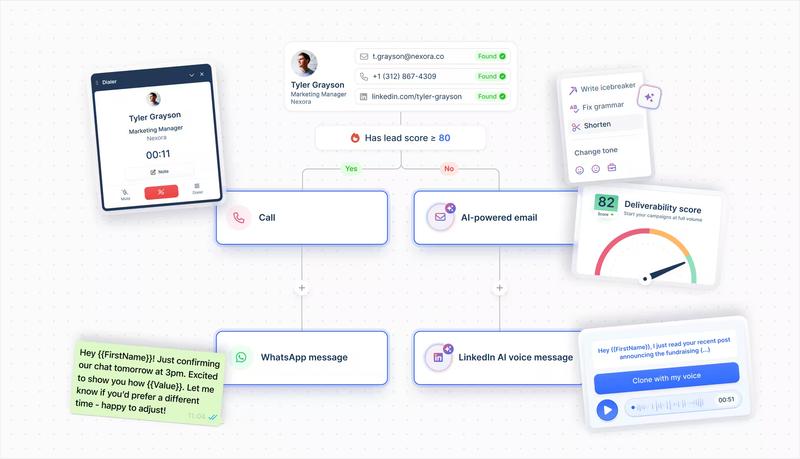
lemlist operates as the ultimate all-in-one outbound AI platform.
- Specific Capability: Access to 600M+ intent-driven lead database and build highly personalized multichannel sequences, covering Email, LinkedIn, WhatsApp, and calling, in under 3 minutes. The AI natively scrapes LinkedIn bios to insert custom icebreakers and cleans messy data by stripping emojis from job titles.
- User Sentiment: Heads of sales value the platform for its high deliverability, which keeps outreach out of the spam folder.
- Pricing:
- Email Pro: $63/user/mo.
- Multichannel Expert: $87/user/mo.
- Enterprise: On Demand.
Apollo.io
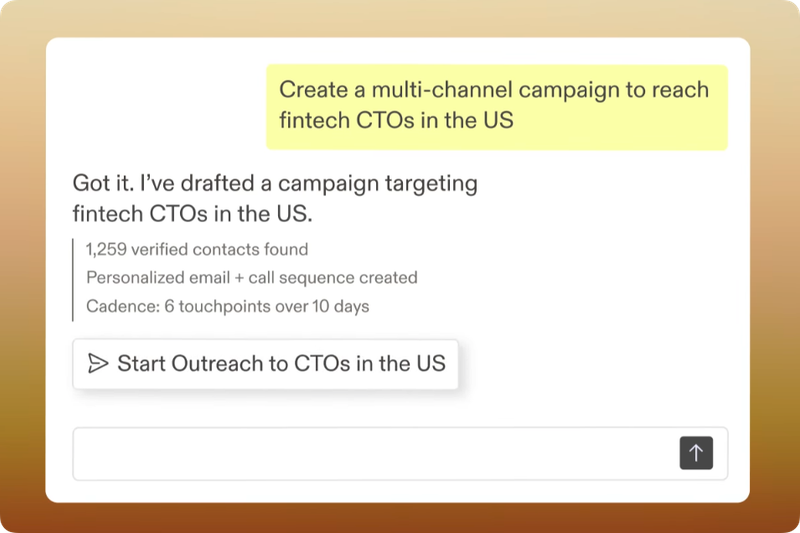
Apollo.io combines a massive lead database with built-in engagement features.
- Specific Capability: The platform provides deep filtering across millions of contacts to help you find specific buyer personas instantly.
- User Sentiment: Users give strong praise for the massive database size. Reddit users also suggest close monitoring of credit limits, as costs scale quickly with high-volume prospecting.
- Pricing:
- Free: includes 10,000 email credits for initial testing
- Basic: $49/user/mo.
- Professional: $79/user/mo.
- Organization: $119/user/mo
AI Email Optimization & Coaching
This category focuses on the psychology of the "send." These tools ensure your message actually earns a reply by analyzing the recipient's likely reaction in real-time.
Lavender
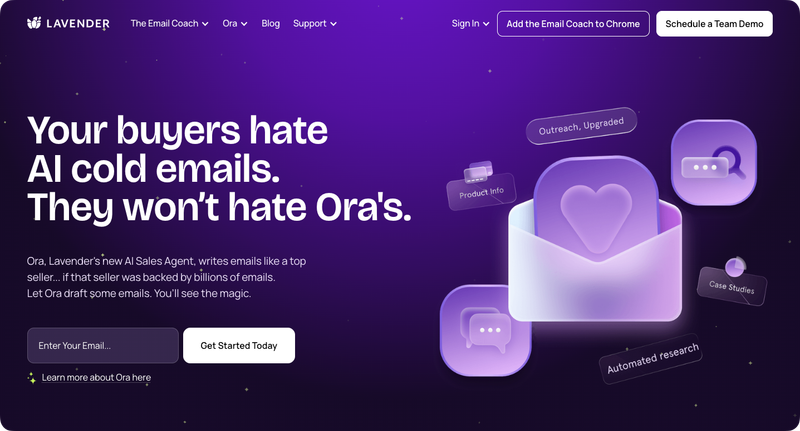
Lavender operates as an AI email intelligence platform that integrates directly into your existing mailbox.
- Specific Capability: Real-time email scoring and coaching inside Gmail or Outlook compose window. The AI evaluates drafts email against millions of successful data points to optimize length, tone, and complexity for higher response rates.
- User Sentiment: Reddit users praise the tool for delivering fast ROI and increasing daily writing speed. Experienced reps note the platform strictly handles copy and psychology rather than automated sequencing.
- Pricing:
- Basic: $0 (Limited to 5 emails per month).
- Individual Starter: $27/user/mo.
- Individual Pro: $45/user/mo.
- Teams: $89/user/mo.
AI-Native & Enhanced CRMs
Modern CRMs no longer function as static databases. They act as the central nervous system for your sales operations, using AI to ensure your data remains clean and actionable without manual intervention.
Attio
Attio represents the modern, AI-native CRM built specifically for fast-growing startups and agile GTM teams.
- Specific Capability: The platform uses a highly flexible, object-oriented data model that automatically syncs and enriches contact or company data directly from emails and calendar streams. This automation eliminates manual data entry and ensures that the records stay current.
- User Sentiment: Startups value the platform for its Notion-like speed and intuitive interface. Traditional enterprise teams sometimes note that it lacks the deep legacy integrations found in older CRM systems.
- Pricing:
- Free: $0 (Best for individuals or very small teams).
- Plus: $29/user/mo.
- Pro: $69/user/mo.
- Enterprise: On Demand.
HubSpot Sales Hub
HubSpot provides a user-friendly ecosystem that balances powerful automation with accessibility for growing businesses.
- Specific Capability: The platform integrates AI across the entire sales cycle, from predictive lead scoring to automated email sequences that pause once a prospect engages.
- User Sentiment: Users highlight the ease of use and the accessible entry point for SMBs. Practitioners also note that advanced automation and reporting features stay locked behind higher-priced tiers.
- Pricing:
- Free Tools: $0.
- Starter: $9/user/mo.
- Professional: $90/user/mo
- Enterprise: $150/user/mo
Salesforce Sales Cloud (Einstein/Agentforce)
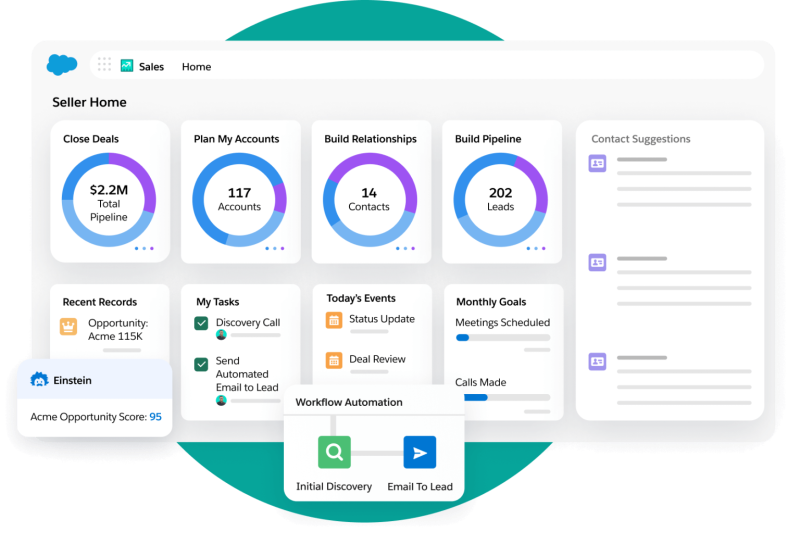
Salesforce serves as the absolute enterprise powerhouse for organizations requiring deep customization and global scale.
- Specific Capability: Its Einstein AI and Agentforce tools provide autonomous agents that handle lead qualification and meeting scheduling within complex enterprise workflows.
- User Sentiment: Leaders view it as the gold standard for large-scale operations. However, it receives heavy criticism for setup complexity that typically requires dedicated administrators or external consultants.
- Pricing:
- Salesforce Foundation: $0 (200 credits)
- Flex Credits: $500/100k Credits
- Conversation: $2/conversation
The perfect tech stack combinations: building the ultimate AI sales engine
Individual tools are great, but the real ROI comes when I connect these platforms to eliminate manual gaps. Based on the workflows I’ve tested, these two specific "Power Stacks" represent the most efficient way to run a sales team in 2026.
The "Meeting-to-Close" Stack (lemlist + Claap)
I use this combination to create a seamless loop between my live conversations and my outbound activation. I host my discovery calls using Claap, which automatically records, takes notes, and logs every detail into my CRM.
I then take those exact insights, like a specific objection or a "ping me" timing signal, to trigger highly personalized lemlist campaigns automatically. This means I never start a follow-up from scratch; I simply pick up the conversation exactly where we left off, maintaining momentum without manual data entry.
- Workflow Acceleration: This stack automates the transition from meeting to follow-up, which saves me 30 minutes of admin work per call.
- Data-Driven Outreach: I rely on this sales coaching software to identify winning patterns from my calls and replicate them across my lemlist sequences.
The "SMB Hyper-Growth" Stack
When I’m building for speed on a budget, I deploy this setup for roughly $85/user/mo. It gives me an enterprise-grade engine that balances data, coaching, and CRM management.
- HubSpot (CRM) - $9/mo: I start with the Starter tier. This is my central source of truth for tracking deals and basic task automation.
- Apollo (Data) - $49/mo: I move into the Basic plan. While the 10,000 free credits are great for testing, this $49 level is what I need to actually export those leads into my CRM and use the advanced filters to find high-intent buyers.
- Lavender (Email Copy) - $27/mo: I add the Individual Starter license. This lives inside my HubSpot and Gmail windows, giving me the real-time AI coaching I need to ensure my outreach actually gets a reply.
The rise of autonomous agents: using an "OpenClaw" for sales
I’m seeing a massive shift in 2026 away from rigid SaaS platforms toward OpenClaw, a viral, open-source AI agent that has already captured over 250,000 GitHub stars. Unlike a chatbot that just talks, this is a persistent "digital worker" that I run locally on my machine or a VPS to actually execute my sales workflows.
What is OpenClaw?
It’s a self-hosted agent runtime that connects my favorite AI models directly to my local files, browser, and messaging apps like WhatsApp, Slack, and Telegram. Because it operates as a "local gateway," it has the unique ability to read my documents and take real-world actions across my accounts without needing a third-party intermediary.
The 24/7 AI SDR
I’ve started wiring OpenClaw into my outbound tools like lemlist to act as a tireless SDR. While I sleep, the agent autonomously scrapes directories and LinkedIn bios to find high-intent leads.
The system goes beyond simple "mail merge," utilizing a specific "personality file" to generate deeply customized emails. These emails are distinguished by their inclusion of references to genuine company news or recent LinkedIn posts. This specific workflow reduces the "Lead Research" phase by 75%, allowing me to focus entirely on closing.
By the time I log in, I have a batch of drafts waiting for my approval, effectively handling the 80% of "grunt work" that used to kill my mornings.
The "Proactive Morning Brief"
Every morning at 8:00 AM, my agent "Henry" sends me a Slack briefing. Overnight, it scans:
- Competitor News: Identifying if a rival just launched a feature.
- Pipeline Changes: Flagging any deals in my CRM that haven't been touched in 3 days.
- Territory Updates: Surfacing new job postings from my target accounts.
Beyond providing data, it recommends concrete "talk tracks" for my daily calls, derived directly from its findings.
User Sentiment & Reality Check
On r/sales, the consensus is clear: OpenClaw is a "godsend" for saving 2–3 hours of daily account research. However, I agree with the heavy warnings from the community regarding autonomy.
While the agent is brilliant at drafting, letting it handle high-stakes pricing negotiations or "full auto" outbound is a recipe for disaster. The tone can still slip, which is why I always maintain a "human-in-the-loop" approval step before any message actually hits a prospect’s inbox.
- Hard Data on Pricing: OpenClaw is free (MIT license). My only costs are roughly $5/mo for a VPS and $15–$20/mo in API tokens, compared to the $1,000+ I’d pay for a bloated "AI SDR" subscription.
Free vs. Paid AI Sales Tools: The "Freemium Trap"
Many founders and sales leaders look for "free AI sales tools," but it's important to proceed with caution. In 2026, "free" usually means a specialized "sandbox" rather than a full production engine. I use free tiers to test a tool's "intelligence," but I always budget for the upgrade the moment I need to scale my volume.
Which free tiers are actually legitimate?
If you are an individual contributor or a solo founder, these three options provide real value without a credit card:
- Claap: Their Free plan is a great entry point for recording meetings and getting basic AI summaries. It allows me to experience the interface before committing to a team-wide rollout.
- Apollo: You get 10,000 email credits for initial testing. This is arguably the most generous data offer in the space, letting me verify lead quality before paying for the $49/mo Basic plan.
- Lavender: They offer a Basic tier ($0) that is limited to 5 emails per month. I use this purely as a "litmus test" to see how the AI scores my writing style.
When you must upgrade to paid
The "Freemium Trap" hits when your workflow moves from a solo experiment to a team operation. I’ve found that you hit the paywall at three specific friction points:
- Deep CRM Integration: While I can record a call for free on Claap, I need a paid seat to automatically sync those notes into HubSpot.
- Team-Wide Analytics: Most free tiers hide the "Manager Dashboard." If I want to see which reps are actually using Lavender’s coaching, I have to move to the $89/mo Teams tier.
- High-Volume Limits: 10,000 credits on Apollo sounds like a lot until you start running multi-channel sequences. Once you scale your outbound beyond a few dozen leads a week, the free credits vanish quickly.
- The 6-8 Hour Productivity Gap: Reps using integrated AI assistants reclaim 6 to 8 hours per week. Free tiers usually lack the "Cross-Platform Search" or CRM automation needed to hit these numbers.
The era of manual CRM entry and "spray-and-pray" outbound is officially over. By moving from isolated tools to an integrated AI ecosystem, you aren't just saving time; you are building a "Smartbound" engine that runs 24/7.
Whether you are deploying a local OpenClaw agent to handle your research or the $85/mo SMB stack to scale your outreach, the goal is clear: automate the 70% of administrative "grunt work" so you can focus on the 30% that actually closes deals.
Don't let your discovery insights die in a notepad. Every conversation is a data point that should trigger an automated, personalized next step. Ready to reclaim 8 hours of your week and eliminate manual data entry?
Start your free trial with Claap today and witness the power of agentic enrichment firsthand.
Frequently asked questions
What is an AI sales tool?
An AI sales tool is a software platform that uses machine learning to automate data entry, prioritize leads, and personalize outreach. These tools analyze datasets to predict buyer behavior and optimize the sales cycle for maximum conversion. In 2026, these will act as "decision-engines" rather than just static databases. For instance, predictive analytics can now forecast revenue with 95% accuracy, while conversation intelligence platforms like Claap extract hidden objections from video calls, turning raw dialogue into actionable CRM data and automated follow-up drafts.
What is a Clawdbot and how is it used in sales?
A Clawdbot is an open-source, self-hosted AI agent designed to act as a 24/7 "digital employee" for sales teams. It runs locally to execute tasks like scraping leads, managing WhatsApp communications, and automating CRM updates. These agents function as proactive SDRs. While a standard chatbot waits for a prompt, a Clawdbot monitors your environment, identifying "hiring signals" on LinkedIn and drafting personalized icebreakers before you start your day. Because it is self-hosted, it offers unwavering privacy for sensitive deal data that cloud-based AIs might expose.
What is the 30% rule in AI?
The 30% rule is a strategic framework suggesting that humans should retain 30% of any workflow for oversight, while AI handles the 70% of repetitive execution. It ensures productivity gains without losing human accountability. In sales, this means letting AI handle the 70% of "grunt work", lead scoring, meeting transcription, and initial drafting. The salesperson focuses their 30% of effort on high-stakes moments: final message approval, creative strategy, and building the emotional trust required to close a deal, preventing "automated coldness."
What are the best free AI sales tools?
The best free AI sales tools are "freemium" entry points that offer genuine utility, such as Apollo’s 10,000 email credits or Claap’s free meeting recorder. These tiers allow for testing without immediate financial commitment. High-value free options include: Claap: Free AI summaries for your first few discovery calls. Apollo.io: Massive database access for initial prospecting. Lavender: A basic "litmus test" for email scoring (up to 5/month). HubSpot Free: A foundational CRM to track your early-stage deals. These tools are perfect for solo founders but require an upgrade for team-wide sync.
How do I combine tools like lemlist and Claap for sales automation?
Combining lemlist and Claap creates an "Agentic Enrichment" loop where meeting insights from Claap are used to trigger hyper-personalized outbound sequences in lemlist. This eliminates the manual gap between a call and a follow-up. For example, when you finish a discovery call, Claap automatically identifies a "ping me" signal. Through the lemlist integration, this insight is fed directly into a campaign. Instead of a generic email, lemlist sends a message referencing that specific conversation point, which has been shown to save 30 minutes of admin per call.