Chorus Pricing Finally Explained (2026 edition)
Understand Chorus by ZoomInfo pricing in 2026, including estimated annual costs, seat fees, contract structure, and a more affordable conversation intelligence alternative.

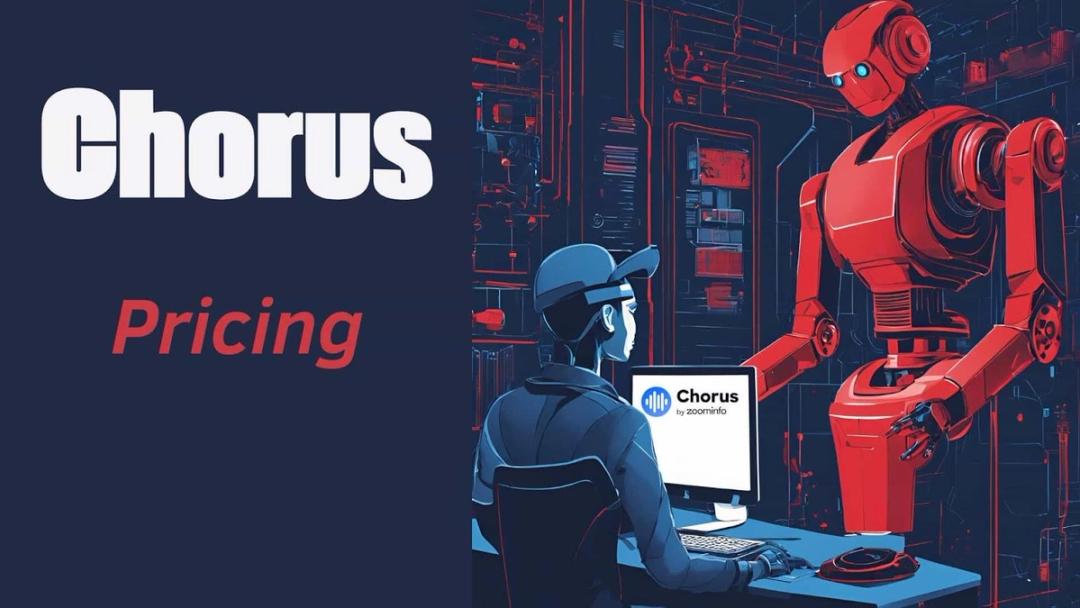
You are looking for an AI-powered meeting assistant and you heard of Chorus by ZoomInfo, but you need some more information, especially regarding costs? In this article, we’re going to answer all your questions, diving into Chorus functionalities and trying to figure out its pricing structure, so that you can make the right decision when choosing the tool that will help you close more deals.
Please note: All the data in this article is accurate as of 17th July, 2026. It is possible prices have been updated since then.
What is Chorus by ZoomInfo?
Chorus by ZoomInfo is a conversation intelligence platform designed to analyze your meetings and business conversations, using advanced AI and machine learning. Through automated recording and transcription of your voice and video calls, it will provide actionable insights in order to improve performance and skills. Moreover, Chorus is mainly designed for sales teams (either sales representatives and sales managers, who can refine sales techniques and coaching), but it will also be a great help for customer success teams (ensuring client satisfaction), and for marketing teams (to get insights about market reactions).
What are Chorus key features?
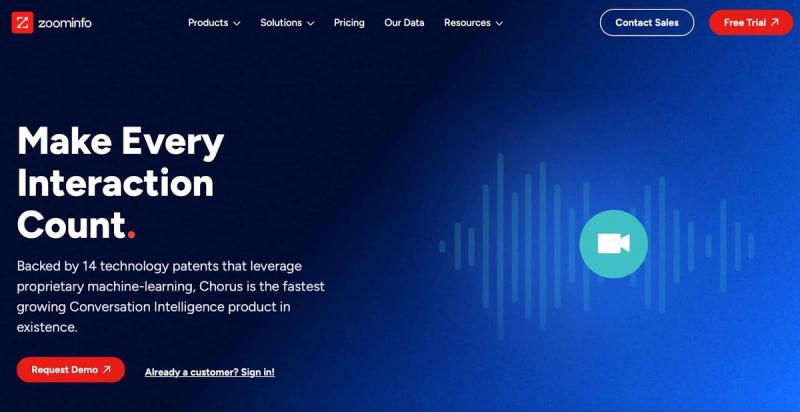
Chorus is a very complex tool with a lot of functionalities. Let’s remind its main features:
- Unlimited recording: Chorus automatically records audio and video calls (integrating with popular communication platforms and CRMs).
- Unlimited transcription: Chorus transcribes your calls in real-time.
- AI analytics and insights: its AI-powered tools analyze the transcription in real-time to identify key topics, questions, engagement metrics, and generate insights (talk ratios, sentiment analysis, conversation patterns), so you can identify successful sales tactics or areas of improvement.
- Integration: since Chorus is part of ZoomInfo, it benefits from seamless integration with a very large B2B database (providing enriched data that will enhance lead qualification and customer understanding).
- Sales coaching: Chorus included comprehensive training tools to help managers refine their coaching strategies (using real life examples from recorded calls).
- Deal execution features: Chorus will track commitment phrases and next steps mentioned during calls, in order to facilitate your follow-ups and ensure they are aligned with your sales goals.
If you want to understand better how Chorus works, don’t hesitate to check our complete guide on Chorus here.
What are Chorus benefits?
With these key features, Chorus can be a real game-changer for your business, in three main areas:
- Comprehensive record keeping: with those recordings, your teams can rely on a reference that will help them to verify details, ensure compliance and maintain consistency across long-term communications.
- Enhanced training and coaching: the insights gained from meeting analytics will help you identify the best practices or areas of improvement, making your training tactics more effective.
- Improved sales strategies: by analyzing customer interactions and feedback, you’ll be able to adapt your strategies in real-time, which will help you build stronger customer relationships and ultimately improve your closing rates.
Is Chorus pricing publicly available?
Chorus by ZoomInfo does not publish a standard price list, so most buyers need to request a quote to understand their exact cost. However, we’ve gathered information that might help you anticipate what investing in Chorus could mean in terms of costs - meaning you are allowed to feel lazy to contact them yourself!
This information is mainly based on traces of interactions with the Chorus team that people have shared online - so it might be slightly different for one specific case or another, depending on your situation.
However, some data often comes back and can be considered as strong. Let’s see more precisely how Chorus pricing works.
How does Chorus pricing work?
Chorus pricing structure: how does Chorus pricing work?
Chorus follows a seller-centric and quotation-based buying approach: they opt for a personalized approach instead of a price list. Indeed, they will collect your requirements (encouraging you to fill out a form and contact their team to get the specifics) so they can tailor a proposal based on your unique needs, and customize the pricing exclusively for you.
However, we can identify 3 major factors that will influence the costs:
- The data and features you need;
- The number of seats you want;
- The duration of the contract you’re willing to sign.
Moreover, Chorus pricing is structured with:
1/ A flat fee: its cost is fixed and generally includes 3 seats (that means you cannot purchase single seats on Chorus). Moreover, Chorus is often sold in the broader ZoomInfo ecosystem, so your total budget can change if you add ZoomInfo data or engagement products.
2/ Additional seats: their cost is individual.
Chorus pricing details: how much does Chorus cost?
According to 2026 pricing research, Chorus by ZoomInfo pricing is usually built around an estimated base fee of about $8,000 per year including 3 seats, plus about $1,200 per additional seat per year, often on a 2-year contract.
- Flat fee: about $8,000 per year (for 3 seats).
- Extra user fee: about $1,200 per seat per year.
- Larger teams: commonly about $1,000 to $1,800 per seat per year depending on volume, contract terms and bundle.
However, many Chorus competitors provide their pricing options in monthly costs. Let’s see what Chorus represents on this scale:
- Flat fee: about $667 per month (for 3 seats).
- Extra user fee: about $100 per seat per month.
Note, this information is based on research and does not guarantee the price you will pay for Chorus by ZoomInfo.
Chorus pricing: total cost (examples)
Let’s say you want to use Chorus for a small team of 10 people.
It will cost you per year:
Flat fee: $8,000
Extra user fee: 7 x $1,200 = $8,400
Total: $16,400 (or $1,367 per month).
Which means, per user : $1,640 / year.
Or: $137 / month.
Let’s say you want to use Chorus for a bigger group of 75 people.
It will cost you per year:
Flat fee: $8,000
Extra user fee: 72 x $1,200 = $86,400
Total: $94,400 / year (or $7,867 per month).
Which means, per user: $1,259 / year.
Or: $105 / month.
How should you assess Chorus pricing?
Pros
Now that we’ve understood what subscribing to Chorus might mean in terms of cost, let’s see what we can think about this investment. First, Chorus is undoubtedly a very comprehensive tool, with rich features and detailed analytics.
Concerning pricing, the tailored approach can seem reassuring and adapted to your needs: you might like having a customized shopping experience. In addition, Chorus offers a sales-assisted free trial, allowing you to test their capabilities (for a limited time, which depends on the deal size).
Moreover, our examples show that Chorus’ pricing structure might be advantageous for big groups, with a decreasing cost per user. You may also see volume discounts around 10–20% at 20+ seats, but adding ZoomInfo data bundles can increase the total annual budget by roughly $15,000–$40,000 depending on the package.
Cons
However, if Chorus by ZoomInfo is a complex tool, this can represent a challenge for new users: it will require a significant investment in training and familiarization, which can be a barrier for teams looking for a quick start with an immediately usable tool. Less importantly, it can be noted that Chorus does not provide every feature compared to competitors (for instance, it lacks Custom API integration).
But above all, despite the tailored approach, the final price (added to the time onboarding will cost you) might seem prohibitive. First, due to the flat fee, you can’t rationally use Chorus for individuals or very small teams. And anyway, the pricing structure might be a concern either for companies with limited budgets (smaller business, startups), or for those that are uncertain about the return on investment from a conversation intelligence tool. And even for bigger companies, the cost per user per month will not fall below $100, which makes it an expensive option on the market anyway.
Is Claap a more affordable Chorus alternative?
You’re interested in Chorus’ tools but it might not fit in your budget? You should first have a look at the best Chorus alternatives.
First, the best overall alternative remains Claap. Claap is a conversation intelligence platform built for the AI Agent Era: it captures every sales conversation and turns it into follow-ups, CRM updates, coaching, and context for your own AI agents. Let’s see more about Claap’s features and pricing structure.
Another alternative to Chorus could be Gong even if it's way more expensive and tailored for Enterprises.

Claap best features
Claap also proposes a very comprehensive set of features, including notably:
- AI-powered sales analytics and reportings: Claap will automatically record your meetings, and above all provide you with AI-generated notes and summaries, so that your team can quickly grasp essential information. Claap’s reports will highlight all the discussed action items, common objections or competitive mention, helping you with your strategic sales planning.
- AI meeting templates: Claap offers AI-generated templates you can even modify in real-time, to capture the structure of your sales meetings and highlight key details.
- Actionable sales coaching: with its AI-powered sales coaching software, Claap helps sales managers to give focused feedback to reps, based on talk-time data and conversational patterns measured with AI to identify opportunities for improvement.
- AI agents and MCP: Claap activates built-in AI agents and connects conversation context to your own agents via MCP, so call insights can support follow-ups, CRM updates and sales workflows.
- Great integrations: Claap integrates seamlessly with your CRM, collaboration tools and general tech stack for higher efficiency - you can connect Claap to your favorite tools to create powerful workflows for your sales and leadership.
Claap pricing
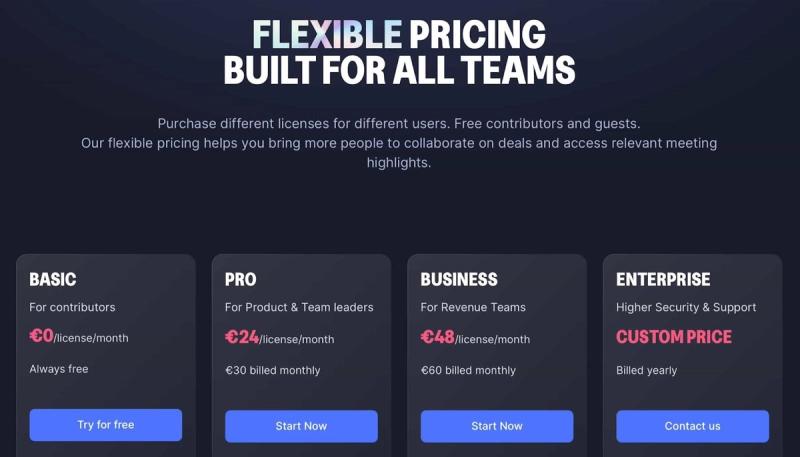
Above all, Claap’s pricing structure has four different options, all remaining below Chorus’ pricing:
- Basic License: it’s free, and includes 10 videos and 300 min of recording per user.
- Pro License: $32 per user per month (or €24), with unlimited recordings and 1000 min per month.
- Business License: $60 per user per month (or €48), with unlimited recordings and recording time.
- Enterprise License: contact Claap to see how the software can be tailored to your needs!
And if you’re eager to explore Claap’s paid features but don’t want to make a financial commitment right away, we’ve got you back. Claap offers a FREE trial (with no credit card required) with unlimited access to all premium features!
Conclusion
Finally, if Chorus by ZoomInfo is an advanced software that has many assets, Claap also proposes a comprehensive set of tools including advanced AI-powered solutions, in order to be the conversation intelligence platform you need. Its pricing structure is also publicly available on Claap’s website, it can be used by individuals or very small teams, and its Business solution, designed for bigger groups and team collaboration, won’t cost more than $60 per month per user, compared to more than $100 for Chorus.
Frequently asked questions
How much does Chorus by ZoomInfo cost?
Chorus by ZoomInfo does not publish public pricing, but 2026 research suggests a base fee of about $8,000 per year including 3 seats, plus about $1,200 per additional seat per year. Many contracts are quote-based and often run for 2 years.
Does Chorus by ZoomInfo have a free plan?
No. Chorus by ZoomInfo does not advertise a free plan. Buyers typically need to contact sales for a quote, and a sales-assisted trial may be available depending on the deal size.
Is Chorus sold separately from ZoomInfo?
Chorus is part of ZoomInfo, and the final budget can depend on whether you buy only conversation intelligence or add ZoomInfo data bundles and related products. ZoomInfo data bundles can add a significant annual cost.
What is a cheaper Chorus alternative?
Claap is a cheaper Chorus alternative for sales teams that want conversation intelligence with transparent pricing. Claap offers a free Basic plan, Pro at $32 per user per month, and Business at $60 per user per month.